Simple Steps to a Balanced Plate
How to Build a Balanced Plate for a Healthier You
Creating a balanced plate is a simple and rewarding way to ensure you get all the nutrients your body needs. By following some basic guidelines, you can enjoy meals that are both tasty and nutritious. Let's explore the key components of a balanced plate and how you can incorporate them into your daily meals.
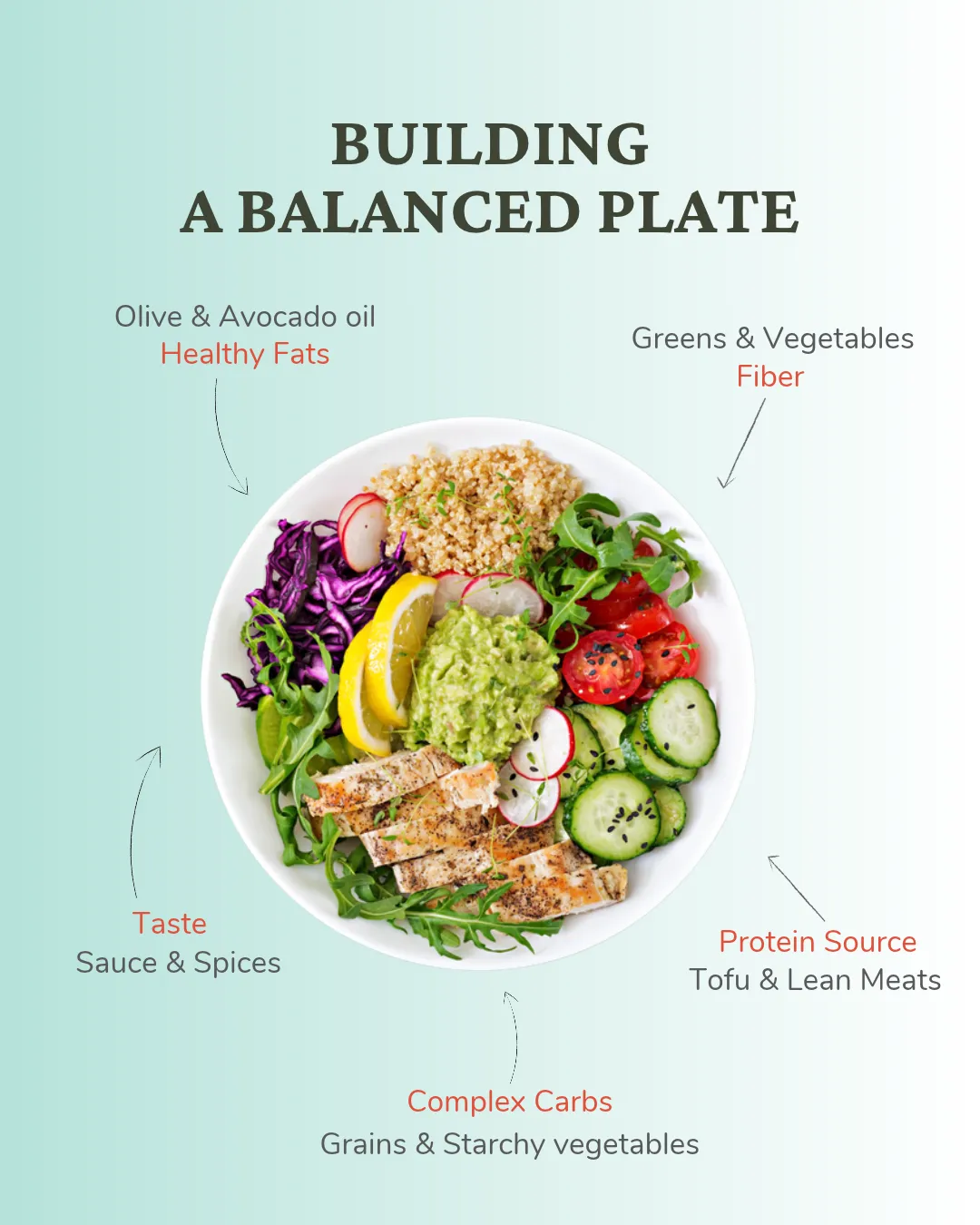
1. Healthy Fats: Olive & Avocado Oil
Healthy fats are essential for maintaining energy and supporting cell growth. They also help absorb some nutrients and produce important hormones. Consider adding healthy fats like olive oil and avocado oil to your meals. These oils are great for cooking, dressing salads, or just drizzling over vegetables.
- Benefits: Provides essential fatty acids and supports heart health.
- How to Use: Use in salad dressings or when cooking your favorite dishes.
2. Greens & Vegetables for Fiber
Greens and vegetables are packed with fiber, vitamins, and minerals. Fiber is important for a healthy digestive system and can help keep you feeling full for longer. Try to fill half your plate with a variety of vegetables.
- Options: Spinach, kale, cucumbers, tomatoes, radishes, and more.
- Benefits: Provides fiber for digestion and nutrients for overall health.
3. Protein Sources: Tofu & Lean Meats
Proteins are the building blocks of our bodies, helping to build and repair tissues. They also play a role in immune function. Choose lean proteins like tofu, chicken, or fish to keep your meals healthy and balanced.
- Options: Grilled chicken, tofu, fish, and lean beef.
- Benefits: Supports muscle growth and immune function.
4. Complex Carbs: Grains & Starchy Vegetables
Complex carbohydrates provide the energy your body needs. They take longer to break down, which helps keep you full longer. Good options include quinoa, brown rice, and sweet potatoes.
- Options: Quinoa, brown rice, sweet potatoes, and whole grains.
- Benefits: Provides energy and keeps blood sugar levels stable.
5. Taste: Sauce & Spices
Adding sauce and spices can make your meal more enjoyable without adding unhealthy ingredients. Be creative with herbs and spices to enhance flavors without extra salt or sugar.
- Options: Basil, oregano, chili powder, and more.
- Benefits: Enhances taste while keeping meals healthy.
Building Your Plate
Here’s a simple way to put it all together:
- Start with greens: Fill half your plate with various vegetables.
- Add protein: Use a quarter of the plate for lean proteins like chicken or tofu.
- Include complex carbs: Use another quarter for grains or starchy vegetables.
- Add healthy fats: Drizzle olive or avocado oil on your salad.
- Season to taste: Use spices and herbs to add flavor.
Conclusion
By focusing on these components, you can build a balanced plate that supports your health and well-being. Remember, everyone’s needs are different, so it’s important to find what works best for you. Give it a try, and enjoy the benefits of a well-rounded diet!